The work happens between appointments. Now you can see it.
Plasticity is therapist-led neuro-rehabilitation software for UK clinics — stroke, brain injury, MS, Parkinson's and FND. This is the record it keeps, dissected.
Centred on the spine — scroll either way to read all six keys.
Prescribe home exercise programmes, track adherence and outcome measures between appointments, message patients securely, and keep notes, goals and a clinician diary in one auditable patient record. It runs alongside your existing practice-management and billing, and works in any modern browser today — patients join by secure invite, with no app-store download.
One record, not six tools.
Plasticity sits between paper handouts, messaging apps, spreadsheets and your practice-management system, and keeps everything that matters between sessions in one auditable place. This is the key to Plate 1.
-
Home exercise programmes
Prescribed with sets, reps and demo videos.
replaces paper handouts
clinician-entered
-
Adherence logging
What actually got done at home, not a guess at the next visit.
replaces guesswork
patient app
-
Outcome measures
Raw scores tracked over time. Stored, never interpreted.
replaces the spreadsheet
clinician-entered
-
Secure messaging
A safe line to the care team, off personal phones and WhatsApp.
replaces messaging apps
shared
-
Notes and goals
Therapist notes and patient-set goals, beside the rest of the record.
in one place
shared
-
Clinician diary and audit trail
Caseload and schedule, every access logged.
connects to your PM system
audit-logged
Recovery does not stop when the appointment ends.
Most neuro-rehab happens at home, between sessions — and until now that work has been invisible. Paper handouts get lost, adherence is guesswork, and outcome scores live in a spreadsheet. Plasticity brings the plan, the logging and the record together, so you walk into each session already knowing what happened.
Previously — one interval between two appointments
Now — the same interval, written to the record as it happens
Fig. 2 scrolls sideways on a narrow screen.
What changes day to day.
- Know what happened at home before the next session.
- See who completed their plan and who stalled.
- Keep messages beside the patient record, not on a personal phone.
- Track raw outcome measures over time.
- Pull scattered admin into one place.
- Keep clinical and admin access separate, by design.
Three points of view, one record.
Private UK neuro-rehab clinics and multidisciplinary teams — everyone who touches the plan works from the same record.
- Clinic owners and clinical leads
- Neuro physiotherapists
- Occupational therapists
- Speech and language therapists
- Multidisciplinary rehab teams
- Practice managers
NoteScreens below are the real product. The patients and clinicians shown are synthetic demonstration accounts — not real people.
The plan, carried home.
Patient · mobile browser
Today's exercises, one-tap logging, a daily check-in and a safe line to the care team. Built for tired hands: text size, contrast and simpler screens are settings in the product, not an afterthought. Patients join by secure invite in any modern browser — there is no app-store download. The patient surface
-
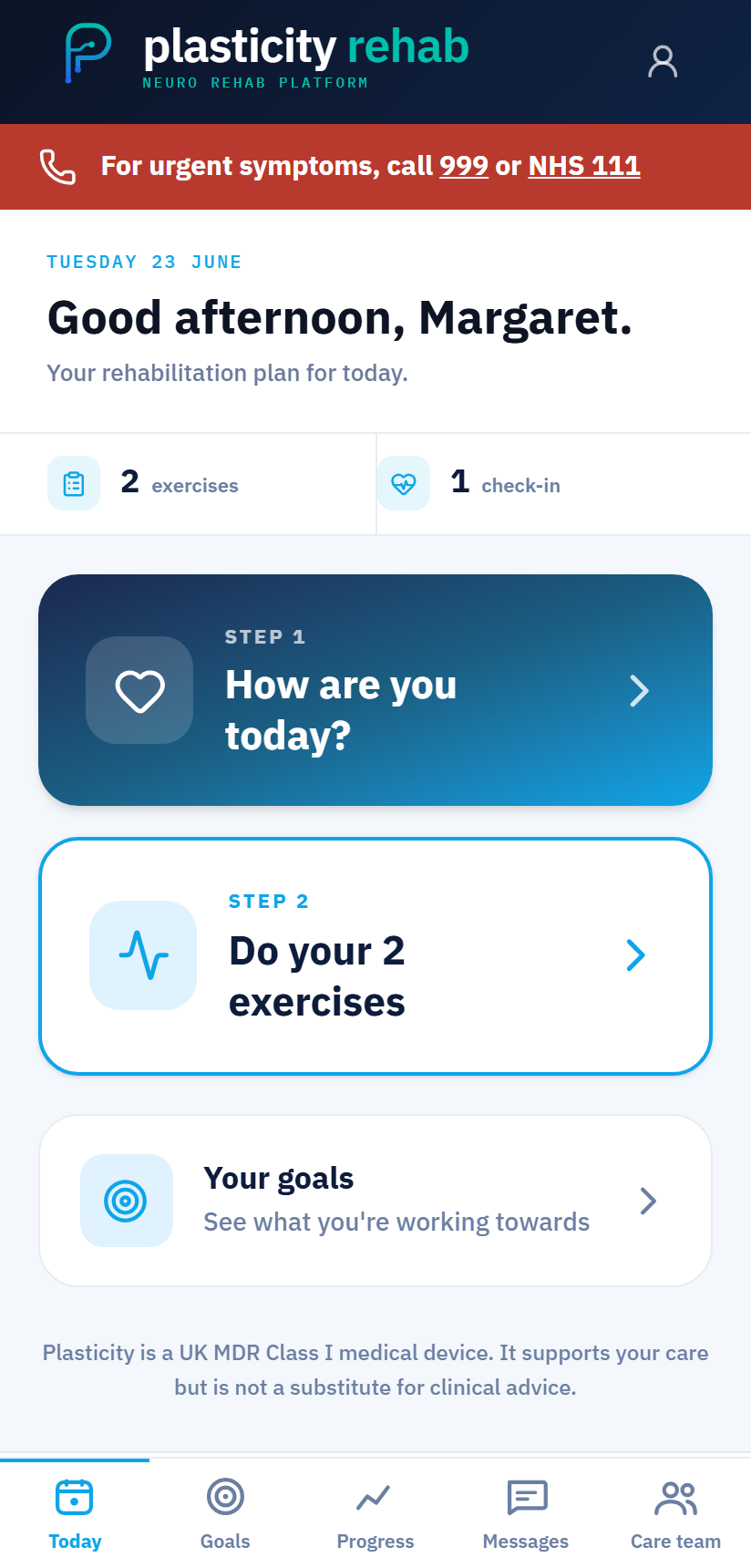
Fig. 3aToday's plan, on the patient's own phone. -
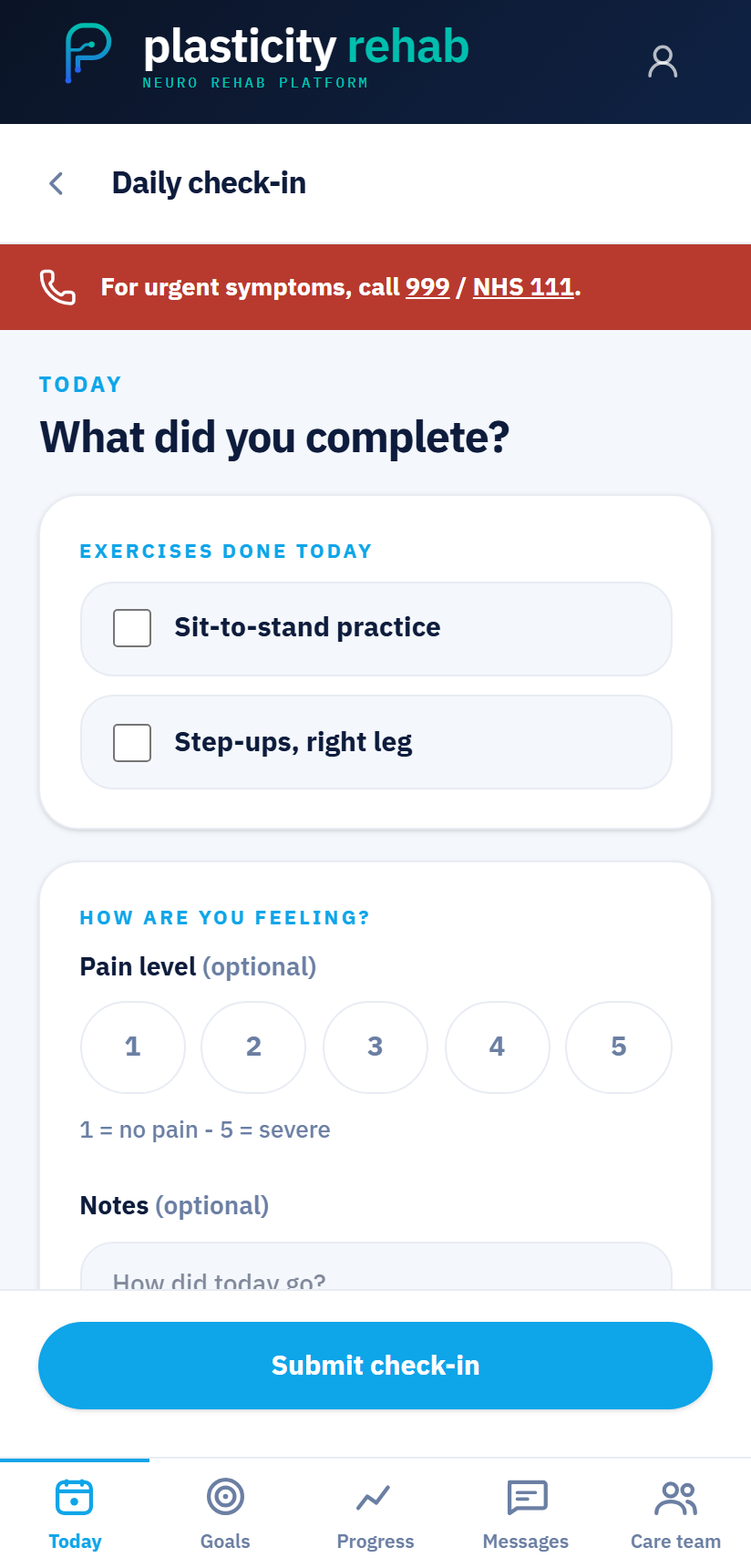
Fig. 3bDaily check-in — what got done, how they feel. -
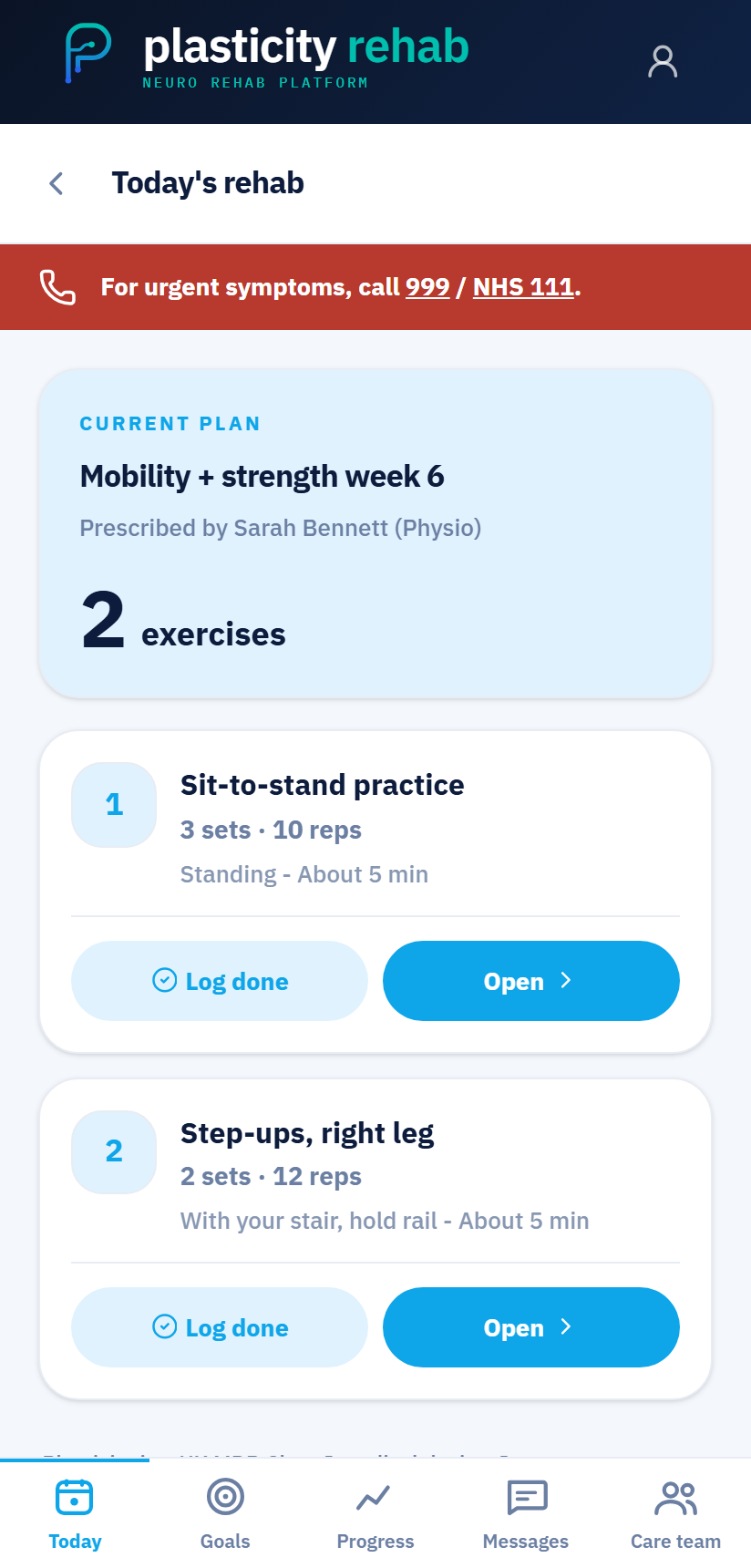
Fig. 3cThe prescribed programme: sets, reps, demo video. -
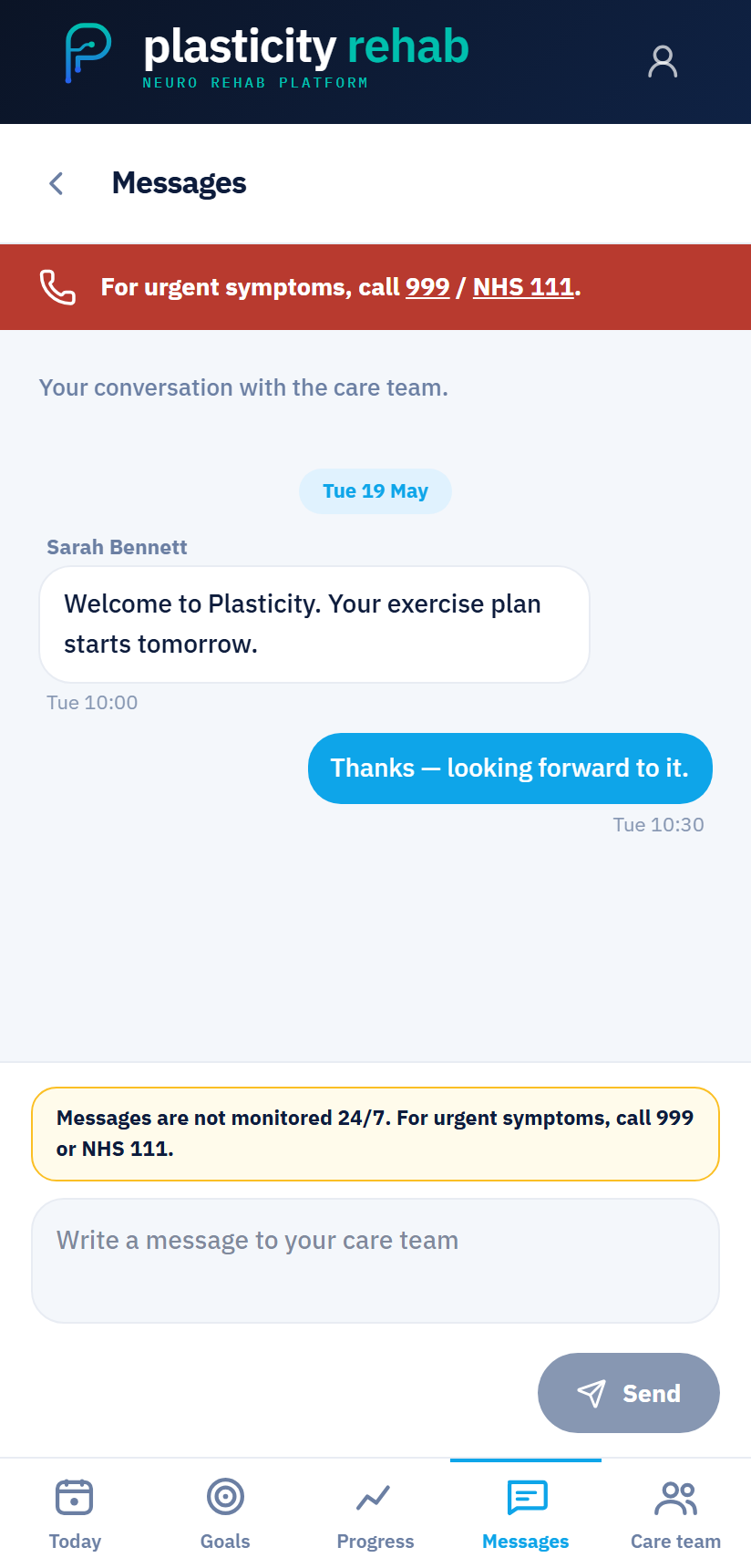
Fig. 3dA safe line to the care team — never the 999 line. -
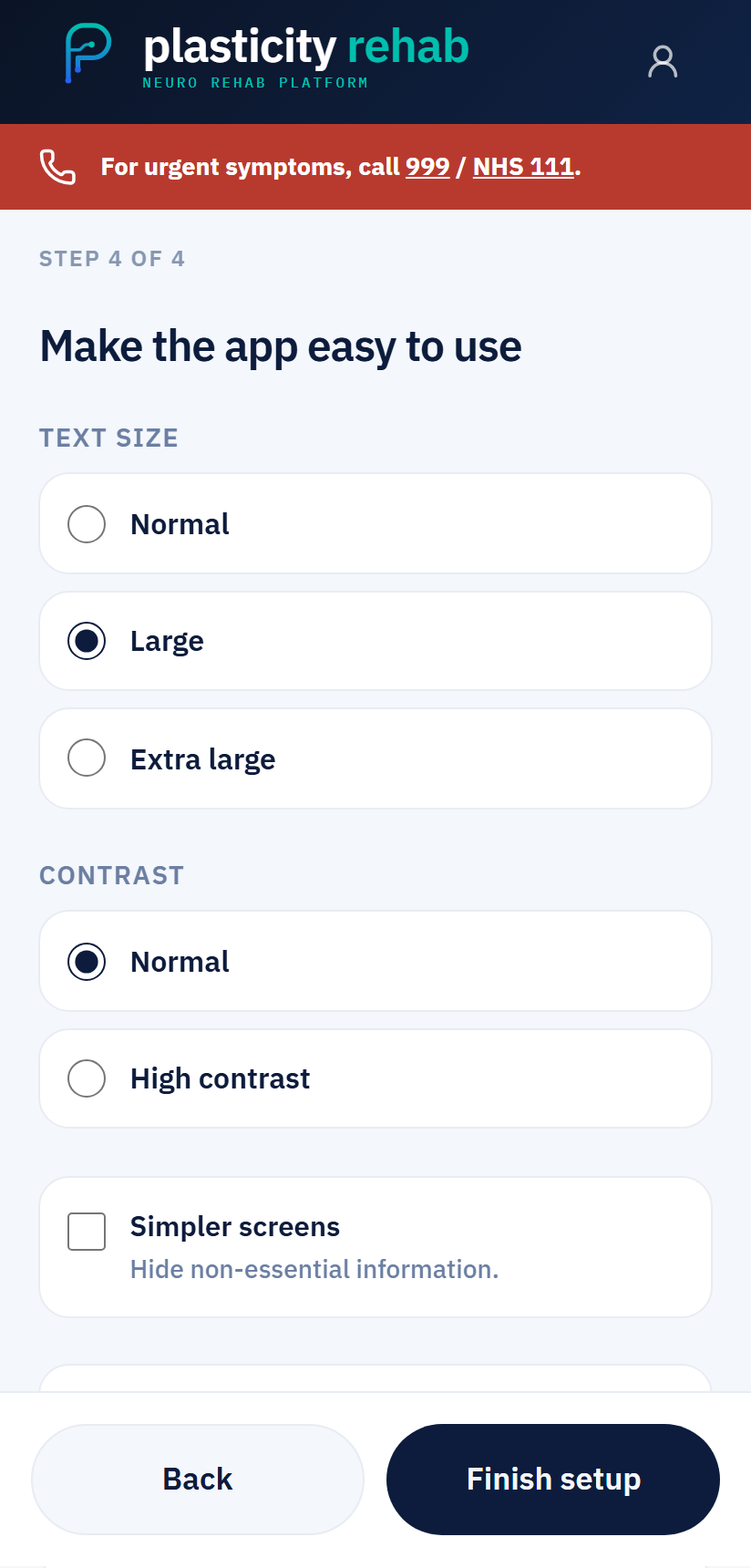
Fig. 3eSet up for tremor, low vision, fatigue, one hand.
The caseload, before the room.
Clinician · web
Build plans from a shared exercise library, capture outcome measures, write notes, and know who moved and who stalled before the session starts. Diary in day, week and month views, across assessment, follow-up, telehealth and home-visit types. The clinician surface
-
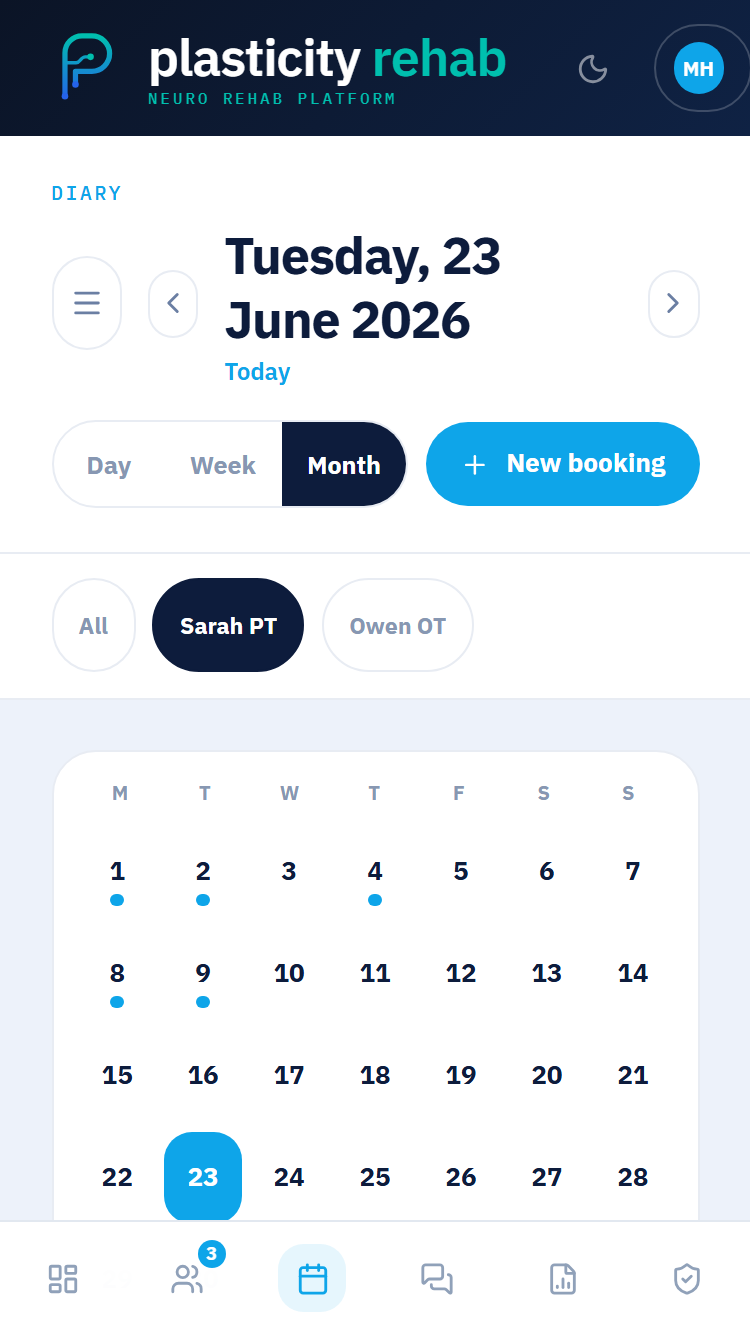
Fig. 3fThe month at a glance, filtered by clinician. -
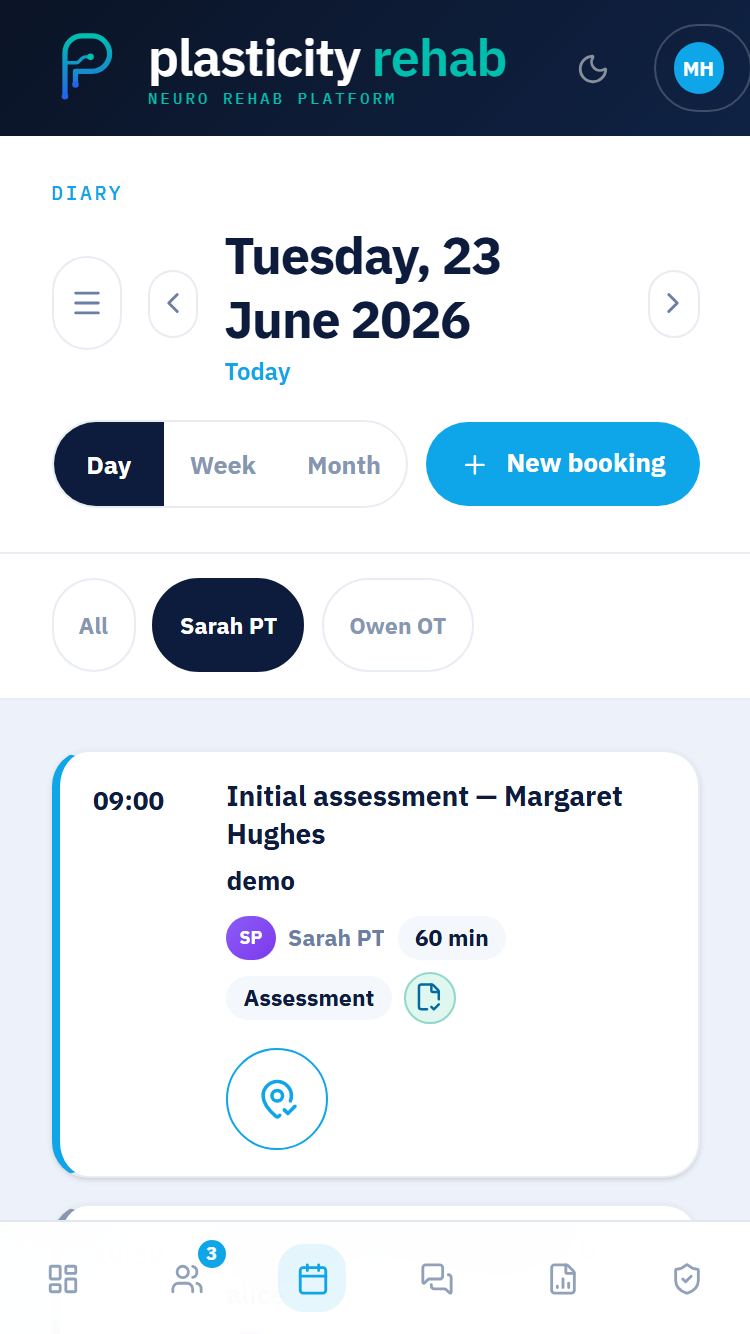
Fig. 3gA single day, in time order.
The clinic, kept in order.
Administrator · web
Manage users, configure services, control access and keep a clean audit trail, break-glass included. Administration never reaches clinical content: separation of duties is the data model, not a setting. The administrator surface
The bright line.
Plasticity keeps the between-sessions record so the clinician can decide — and refuses to interpret it. That refusal is not a roadmap gap. It is what keeps the device inside UK MDR Class I.
Above the line, Plasticity records what happened between sessions, shows the clinician the raw scores unchanged, and logs every access to the record.
Below the line — where Plasticity does not go
- No risk scoring
- No automated escalation
- No AI inference on patient data
- No diagnosis
- No MCID flags
- No score interpretation
- No dosage calculation
Crossing any one of those lines would reclassify the device. The bright line is the reassurance, not the headline.
| Standard | Status today |
|---|---|
| UK MDR 2002 Class I medical device | UKCA self-declared. MHRA registration in progress. |
| UK GDPR / DPA 2018 | Built in. UK data residency. Data minimisation. |
| ISO 14971 | Planned — building toward |
| DCB0129 | Planned — building toward |
| WCAG 2.2 AA | Planned — building toward |
| Cyber Essentials | Planned — building toward |
ISO 14971, DCB0129, WCAG 2.2 AA and Cyber Essentials are planned and being built toward. None of them is claimed as achieved, compliant or certified, and no external approval is implied by the Class I self-declaration. The full compliance position
Plasticity is in private preview.
It is still in development. There is no bookable demo, no sign-up, no trial, no pricing and no waitlist — we are onboarding a small number of UK neuro-rehab clinics who want to shape an early product. If that is your clinic, email us and say so.
Developed with practising UK neuro-rehab clinicians across stroke, MS, TBI, Parkinson's and FND workflows. Native iOS and Android apps are roadmap, not shipped.